
Flow diagram
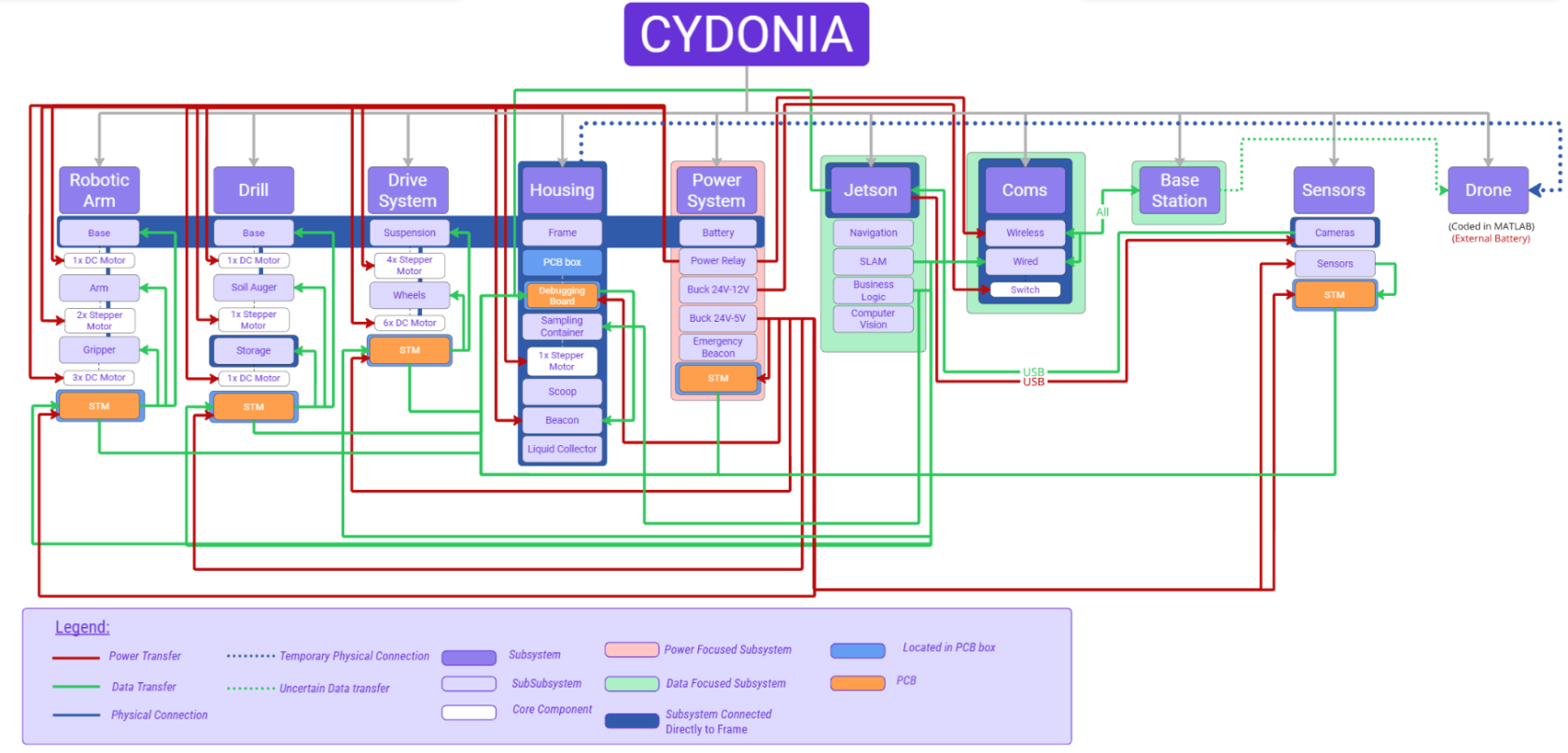
Figure 1: Flow diagram of Cydonia, the first Mars rover built by Roboteam Twente for ERC 2026.
1. Current System Goals & Accomplishment
Cydonia is a prototype of a Mars rover inspired by NASA technologies, previous robotics innovation, and rough solutions to troubleshoot quickly certain technical challenges discovered along the way. The books, chapters, and pages in this wiki aim to describe the current system, but also transfer the collected knowledge on these technologies and on the state of our current system.
The team set as initial goals to create a modular system to facilitate integration of new features in future iterations of Cydonia. The modularity was a goal for both hardware and software. Additionally, we decided to focus on the most crucial subsystem and leave the missing subsystems for future versions of Cydonia.
The system is divided into mechanical, electrical, and software subsystems, presented in Figure 1. The robotic arm, the drill, the drive system and the housing are mainly electrical and mechanical subsystems. The drill and the drone remained theoretical subsystems during the academic year 2025-2026 and should be developed into prototypes during the academic year 2026-2027. The power system is mainly electrical, and the Jetson, the communication, and the base station involve both electrical and software. The use of STMs allowed the project to develop faster. The robotic arm and the drill are envisioned to be interchangeable subsystems. In future iterations of Cydonia, the base developed for the robotic arm can be used for the base rotation of the drill as well.
The aim of Figure 1 is to illustrate all crucial interactions between components and subsystems. This is a relatively high-level chart, and one must visit the individual books of each subsystem to gain a proper understanding of the functionning of each subsystem. However, due to time constraints, certain subsystems (e.g. Power System, Basestation, etc.) were not fully developed based on the plan and, hence, may not follow the above system architecture. Due to the late development of the system from the hardware side and the challenges faced with the new infrastructure, the software subsystem was not pushed as far as the software team aimed to.
The list of requirements set up by the team for Cydonia for all subsystems and all subteams can be found at this location: Requirements_ERC2026_ RTT. Due to time constraints, these requirements were not all properly verified. The few tests performed (ERC 2026) for system validation that were performed can be found at the following location: Test & Validation.
2. Future Prospects
Cydonia is still at the prototyping phase, which makes it an unstable and fragile system to work with. In future iterations, the system must undergo improvements to make the mechanical design, the electrical system, and the embedded codes sturdier and more reliable. Additionally, the current prototype and knowledge developed during the academic year 2025-2026 should allow the software team to develop faster and more easily.
During integration and troubleshooting, several issues were observed that must be fixed on a system level:
- Motor accessibility: It was noted by all subteams that making the motors easily removable from the system while the rover remains mechanically functional would be very helpful during testing and troubleshooting.
- Testing installations: Testing the rover also required some creativity from the engineers' side. Developing certain infrastructures for testing could allow better identification of challenges. Examples of these are a hoist to work safely on the rover while not on the ground, a maintenance task board, a transportable base on which the robotic arm can be tested independently without the need of clamps for balance.
- Cable management: Cable management must be considered early in the development to ensure that enough space exists and that the appropriate hardware exists to protect and organise the cables while keeping them accessible.
- Sensors integration: Currently, it is challenging to define the performance of the system due to the lack of sensors and testing with sensors. Hence, integration of sensors should be a priority for the team to be able to identify the current weaknesses of the system and work efficiently.
- Development of custom PCBs: The electrical subteam aims for the development of custom-made PCBs to replace the standard STMs currently in use within Cydonia. This will require efficient communication between software-related subteams and a parallel re-development of the PCB box. This will ensure easy handling and testing of the PCBs.
- System planning: While developing the system architecture, it is important to consider the technical planning. The technical planning should mainly consider rough goals. The more detailed planning of the work should occur through the close collaboration of the technical manager and the system engineer every few months (e.g. every 10 weeks/every module).
No comments to display
No comments to display